Otoplasty is a surgical procedure designed to correct the shape, position, or size of the ears. The most common reason for undergoing this surgery is to correct so-called “prominent ears” or “protruding ears”, which can sometimes cause self-consciousness or discomfort.
The procedure repositions the ears closer to the head, improves symmetry, and, in some cases, reduces their size or reshapes the cartilage to achieve a more natural and harmonious appearance.
Otoplasty can be performed on both adults and children (from around 6–7 years old, once the ear cartilage is fully developed). It is a safe surgery that provides permanent results.
The goal is to achieve ears that are proportional and balanced with the rest of the face, leaving no visible signs of surgery oand always maintaining a natural look.
Otoplasty is usually performed under local anesthesia and, in some cases, with mild sedation for greater comfort. The procedure lasts between 1 and 2 hours, depending on the complexity of the case.
The surgery involves making a small incision behind the ear, which allows the surgeon to reshape the ear cartilage. Depending on each patient’s needs, it may involve:
The sutures are hidden behind the ear, making the scar practically invisible.
Otoplasty is a safe procedure with a quick recovery, providing permanent results and a significant improvement in patient confidence.
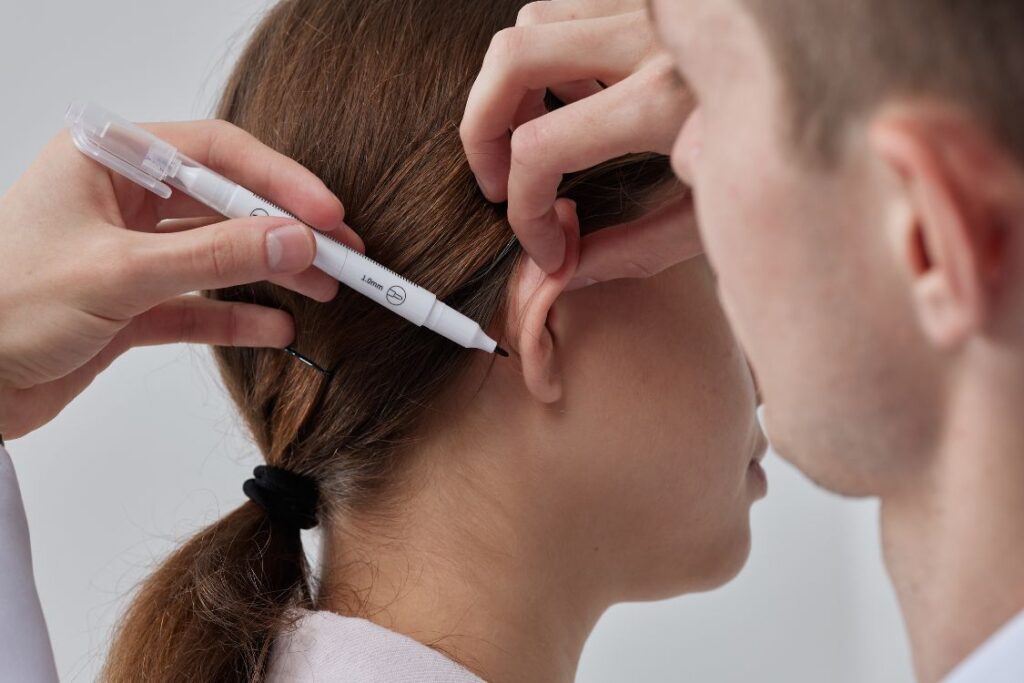
The results of otoplasty are visible immediately after surgery, although the final appearance becomes more evident as the swelling subsides.
In some cases, the procedure may be complemented with a lobuloplasty, which corrects or improves the shape of the earlobe (for tears, dilatations, or aesthetic concerns), providing an even more refined outcome.
Otoplasty provides permanent results, enhancing not only facial aesthetics but also the patient’s confidence and self-esteem.
Recovery after otoplasty is generally quick and well tolerated:
Follow-up visits are scheduled to ensure a safe recovery. The final results become evident within a few weeks, once the ears settle into their new position.
It is recommended from the age of 6-7, once the ear cartilage is fully developed. It can be performed on children, teenagers, and adults of any age.
No. The incision is placed behind the ear, so the scar remains hidden and virtually unnoticeable.
Yes, reshaping the cartilage provides long-lasting and definitive results.
It is generally not painful. Some mild pressure or discomfort may be felt during the first few days, but it can be easily managed with standard medication.
Most patients return to daily activities within 7–10 days. For contact sports or intense activities, it is advisable to wait about 2-4 weeks.

